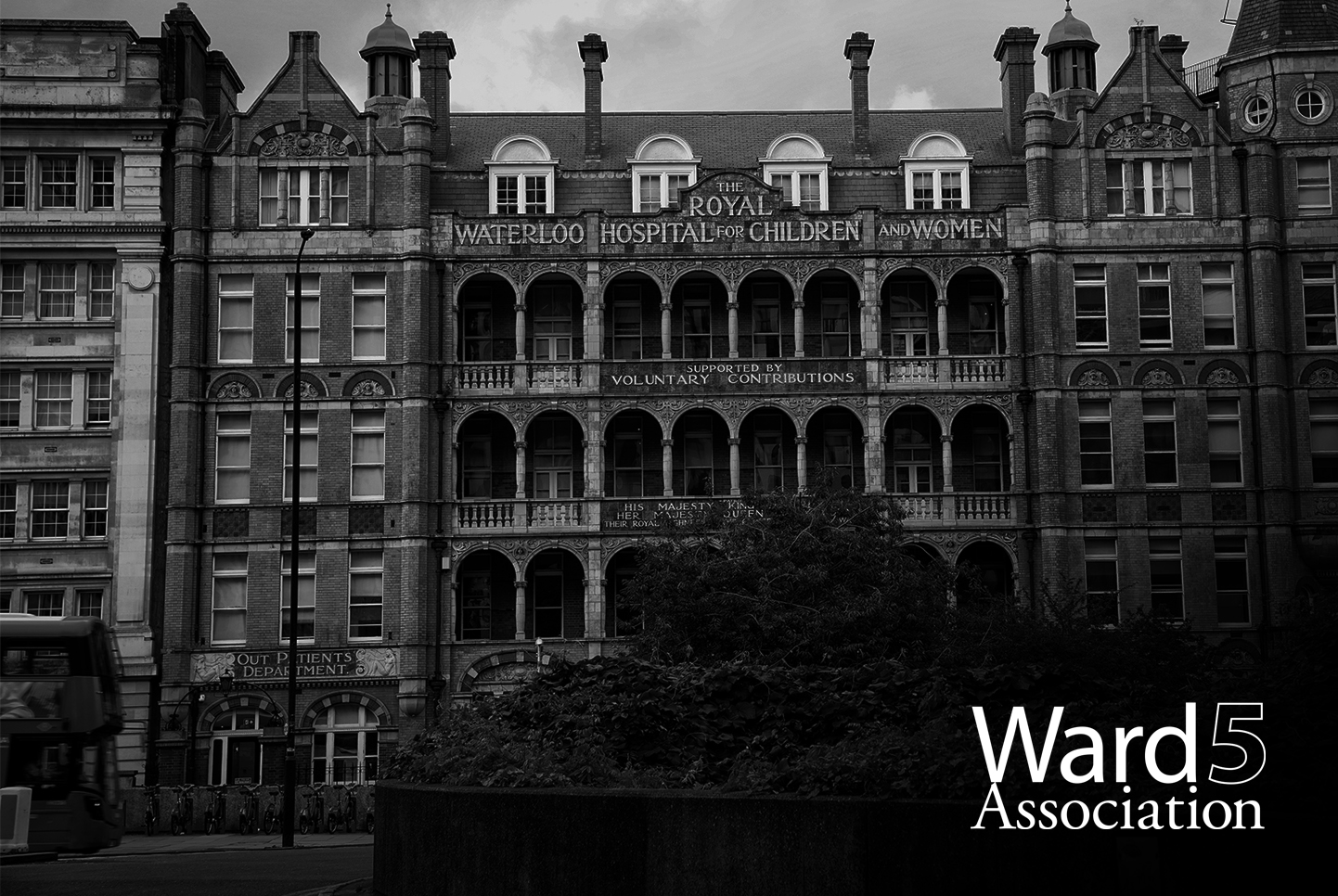
What went wrong at The Royal Waterloo Hospital?
The Ward 5 Association has identified several areas of concern about the treatment that was given to NHS patients in the Narcosis Room at the Royal Waterloo Hospital.
1 That Narcosis treatment had never been properly evaluated for safety and efficacy before St Thomas’ consultants began using it on patients. The treatment was only used at The Royal Waterloo Hospital or by psychiatrists who had been trained at St Thomas’ under Dr William Sargant.
2 That the authorities at St Thomas’ Hospital allowed a dangerous and damaging treatment that had no validity to be taught to a generation of psychiatrists, anaesthetists and nurses some of whom went on to set up other Narcosis units in the UK.
3 That the overwhelming majority of patients treated in the Narcosis Room were women and girls.
4 That obsolete and discredited treatments that were no longer in use in any advanced health care system were given to patients between 1964 and 1973 at The Royal Waterloo Hospital.
5 That informed consent to Narcosis treatment was neither sought by St Thomas’s psychiatrists nor given by the patients who were forcibly made to undergo Narcosis treatment and that the Nuremberg Code of 1947 was not observed.
6 That informed consent to Narcosis treatment couldn’t have been given since the outcome of such treatment was so uncertain and that in this way the Nuremberg Code of 1947 was not observed.
7 That even if consent had been given at an early stage, it was an abuse for doctors to continue to give Narcosis for up to three months when patients were clearly pleading for their treatment to stop.
8 That Dr William Sargant’s sexually predatory behaviour was so well known that defenceless female patients who were heavily drugged shouldn’t have been left unchaperoned and in his care in a darkened room.
9 That the conditions in which Narcosis patients were nursed were both unorthodox and insanitary.
10 That St Thomas’ Hospital authorities failed to appreciate that Narcosis treatment was abusive and traumatising and that patients who had undergone it were emotionally damaged by the process.
11 That voluntary patients who should have been free to refuse Narcosis treatment and to leave Ward 5 at any time were forcibly detained on a locked ward.
 Word5Association