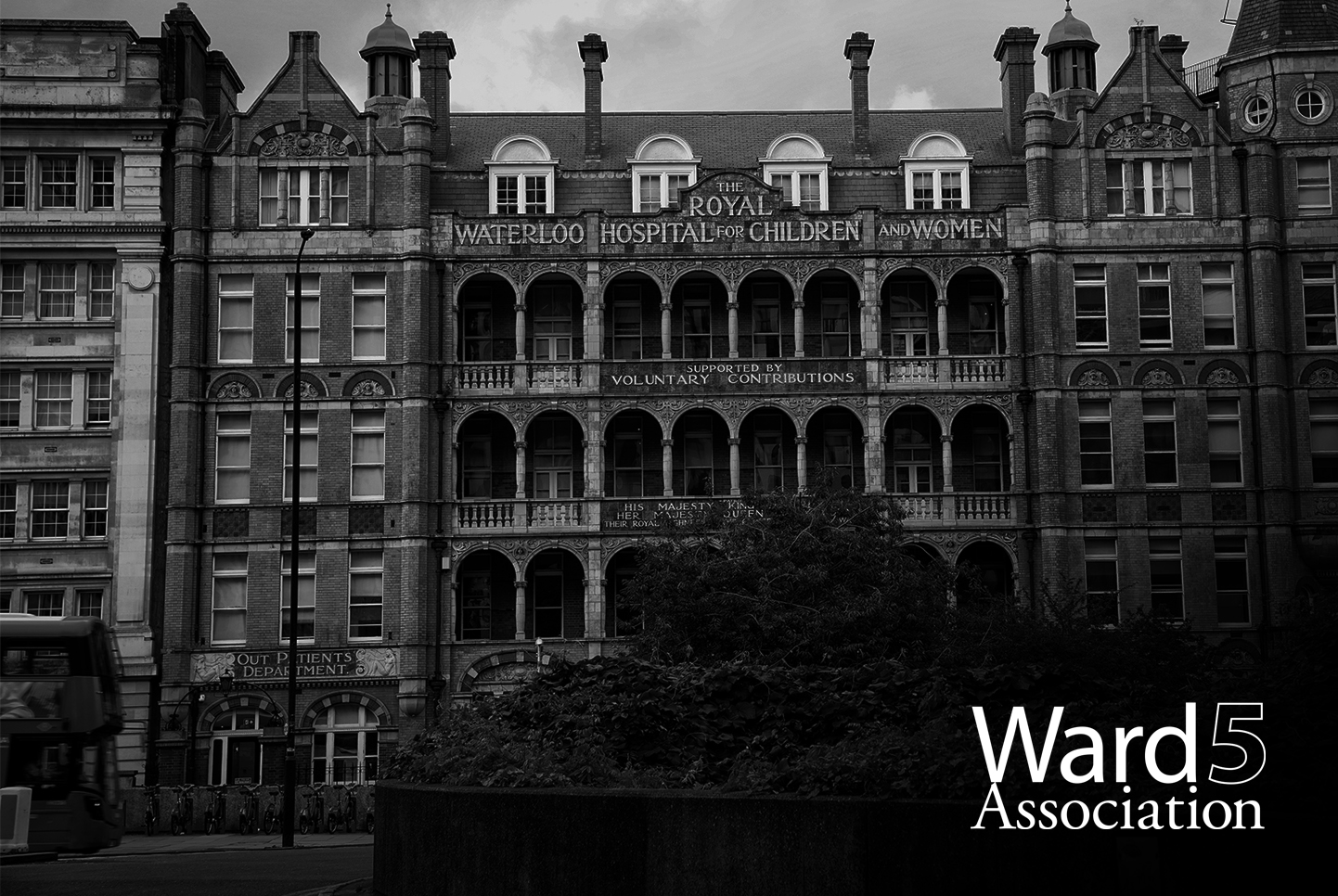
Insulin Coma therapy was still in use in the 1970s on Ward 5
In 1966 when the actress Celia Imrie was 14 years old William Sargant treated her for an eating disorder. She was admitted to Ward 5 at The Royal Waterloo Hospital and in her 2011 book ‘The Happy Hoofer’ she describes the Narcosis Room where patients were undergoing ‘deep sleep treatment’. “I can describe it perfectly. I used to sneak out of the ward to peer through the portholes in the swing doors, and gaze at dead-looking women lying on the floor on grey mattresses, silent in a kind of electrically induced twilight.” Although this sounds dreadful, it wasn’t actually the Narcosis Room. Narcosis patients slept in ordinary divan beds, the sort you have at home, which was odd enough given that this was a hospital ward, but what Miss Imrie has confirmed is something that former patients have long believed – that up until it was closed in mid 1973 there was an insulin coma facility and that insulin coma was still being given on Ward 5 at The Royal Waterloo.
Compare Miss Imrie’s striking account with that of a nurse in Diana Gitten’s book ‘Madness In It’s Place: Narratives of Severalls Hospital 1913-1997’, describing how insulin coma therapy was administered at Severalls. “They used to give insulin coma therapy with ECT on Ward 14. There were mattresses all along the floor on one side of the ward with alternately one mattress then two on top of each other. This was so patients couldn’t fall or roll about and harm themselves. The ward was also used for ECT and sometimes they had ECT when they were in insulin coma.”
Dramatic weight gain was a well known side effect of insulin coma therapy and The Narcosis Research Group also has the testimony of a patient treated on Ward 5 in 1973 and who gained three stones over an admission period of four months, two of them spent in the Narcosis Room when little food was taken as a result of the patient being drugged into semi consciousness for most of the time.
If as Dr Kingsley Jones states, insulin coma was abandoned soon after it was discredited in 1957, how is it possible that St Thomas Hospital allowed its consultant psychiatrists Dr Sargant and Dr Pollitt to continue to use this savage treatment on patients up to 16 years later?
In 1950 Kalinowsky and Hoch carried out animal and post mortem studies that demonstrated insulin coma caused extensive and irreversible brain cell destruction the extent of which was proportionate to the number of comas patients had received. These findings were later confirmed in a 1953 study by Sadler. It was later concluded that there was no evidence that this effect was beneficial except that it made patients quieter and more manageable.
 Word5Association