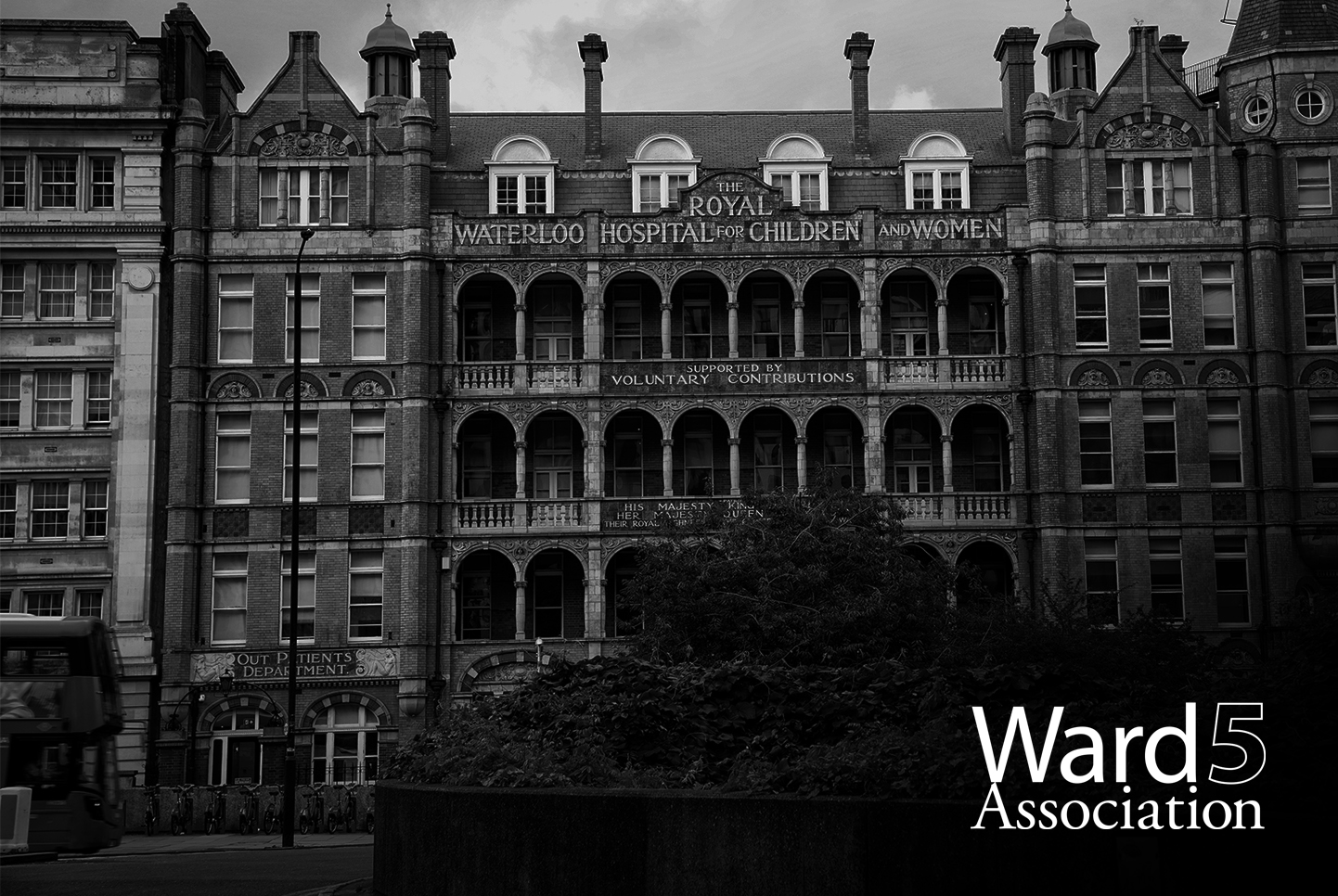
Ether Abreaction still in use on Ward 5 in the 1970s
Abreaction is a bit like catharsis, a concept that has been around since Ancient Greece. In the 1880’s Sigmund Freud’s colleague Josef Breuer was the first to use the word ‘catharsis’ to describe a therapeutic technique. Breuer’s patients were encouraged to recall traumatic experiences whilst under hypnosis in order to relieve their emotional distress. The technique was revived during World War 1 to treat shell shocked soldiers. The idea was the same. Painful experiences that had been repressed were supposedly the cause of the patient’s neurosis.
Re-living those experiences would allow them to be dispelled and if the patient was resistant to the idea of going through whatever it was again, the therapist’s job was to assist or even compel the patient to recall these events. It was well understood that recovering these repressed events could be terribly painful and that the therapist would need all his skill to cope with the anxiety that was released, comforting the patient if his emotions became too intense.
During WW2 Dr Sargant and his colleagues began injecting traumatised soldiers with drugs or having them inhale ether, which was dripped onto a gauze mask, then talking them through the experiences that had supposedly caused their breakdown. Sometimes the events themselves had been repressed and sometimes although the events were remembered, the patient had repressed the strong emotions associated with them.
By 1944 Sargant and his team had realised that abreaction could be bought about not only by making patients relive real experiences, but by discharging basic emotions. So they set about inventing terrifying scenarios and putting these to their sedated patients, Sargant claiming that they were carefully relating these planned ’emotional blow-offs’ to the patients actual war experiences. “For example we might excitedly tell a member of the Royal Tanks Corp, who had broken down in battle, that he was trapped in his burning tank and must fight his way out.” This seems terribly cruel and must have been horrible for the men undergoing treatment but Dr Sargant was confident that he could anticipate his patient’s reactions. “The patient who has undergone abreaction has no doubt that something vital has happened to him,” he says in ‘An Introduction to Physical Methods of Treatment in Psychiatry.’ “After the emotional storm, not only is the slate wiped clean, as it were, but the patient is left in a more impressionable state than before.”
He goes on to say that the therapist can now implant new ideas in the patient, “the nature of which will be decided by his social, psychoanalytic or religious predilections.” He doesn’t say what he thinks qualifies ‘the therapist’ to invade the minds of patients and implant ideas that may or may not accord with the patient’s own ideals and principles. Always highhanded and careless of his patient’s feelings, this kind of comment supports the view that Sargant saw nothing wrong with brainwashing or with implanting his own ideas into patient’s minds, much like Dr Ewen Cameron at the Allen Memorial Institute whose sadism exceeds even that of Dr Sargant and Dr Pollitt.
Ether abreaction was still being given to patients on Ward 5 at The Royal Waterloo Hospital as late as 1973 and we believe that it was the only unit in the UK still using this obsolete and bizarre treatment.
 Word5Association